
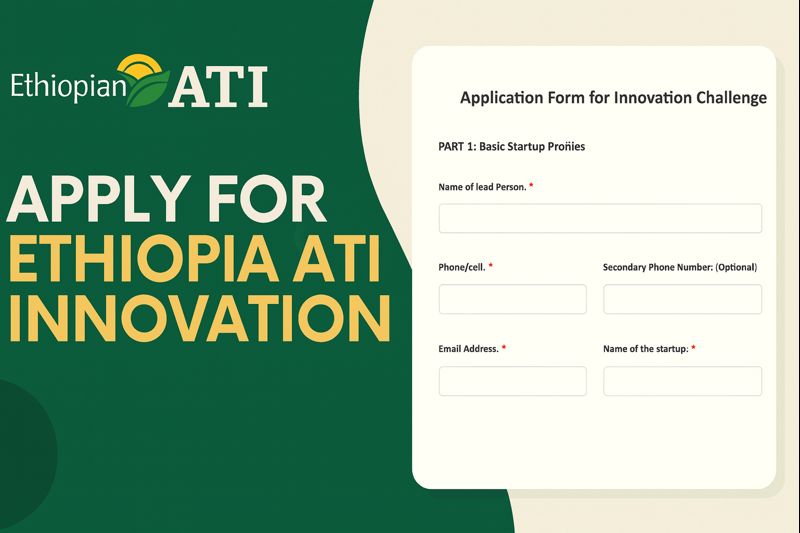
Innovation Challenges are excellent opportunities for startups to showcase their ideas, receive mentorship, secure funding, and gain visibility. For AgTech startups, these challenges can be game-changers—helping to bridge the gap between agricultural innovation and real-world impact. However, the application process can seem overwhelming, especially if it’s your first time applying. Don’t worry! In this guide, we’ll walk you through each step of the application process in detail and provide tips to maximize your chances of success.
Step 1: Prepare Your Basic Startup Information
The first part of the application is about your startup’s identity and legal/operational status. Providing complete and accurate information here is essential because it forms the first impression for the judges.
1.1 Lead Person Details
Start by entering the details of the lead person in your startup. This is typically the founder or co-founder who will be the primary contact. You need to provide:
- Name: Use your full legal name.
- Phone/Cell Number: Include a number that you check regularly.
- Secondary Phone Number (Optional): Useful in case the primary number is unavailable.
- Email Address: Ensure this is professional and regularly monitored. Organizers may use it for communication.
Pro Tip: Avoid using informal emails like “coolguy123@email.com.” A professional address can help establish credibility.
1.2 Startup Details
Next, provide details about your startup:
- Name of the Startup: This should match your registration documents if you are registered.
- Social Media Profiles (Optional): Include links to Facebook, Instagram, LinkedIn, or any platform where you share updates about your startup. Social proof can make your startup appear more credible.
- Website URL (Optional): If your startup has a website, include it here. Even a simple landing page can strengthen your application.
1.3 Legal and Operational Status
The next set of questions helps organizers understand how established your startup is:
- Registered as a Business: Indicate whether your startup is officially registered, in process, or not registered.
- Years in Operation: Choose one:
- Not yet operational
- Operational but less than 3 years
- Above 3 years
- Region: Specify where your startup operates. This helps organizers understand regional representation and may influence support opportunities.
- University or TVET Enrollment: If you are currently a student, indicate Yes or No. Some challenges have special tracks for students.
- Intellectual Property/Copyright: If your startup owns patents, copyrights, or trademarks, select “Yes.” Otherwise, select “No.”
Pro Tip: Be truthful—exaggerating your operational status or IP ownership can hurt your credibility later.
Step 2: Detail Your Innovation
This is the most critical part of the application. Here, you’ll describe what your startup does, what problem it solves, and why it’s innovative.
2.1 Select Your Thematic Area
The Innovation Challenge categorizes startups based on thematic value chains. Choose the category that best fits your solution. Common areas include:
- Input: This includes solutions for demand aggregation, input traceability, financing, quality assurance, and advisory services. Example: An app that helps farmers order certified seeds and track deliveries.
- Production: Covers precision agriculture, smart farming, climate-smart agriculture, farm automation, and livestock/dairy tech. Example: An IoT-enabled irrigation system that optimizes water usage.
- Marketing: Solutions that focus on digital marketplaces, post-harvest supply chain management, real-time price intelligence, and export enablement. Example: A digital platform connecting farmers to buyers across the country.
- Cross-Cutting Issues: Encompasses digital financial services, climate and weather information, gender and youth empowerment, and capacity-building platforms. Example: A mobile platform providing agricultural microloans to smallholder farmers.
- Mechanization: Covers digital platforms for machinery management, IoT for predictive maintenance, equipment financing, and remote sensing for mechanized farming. Example: A scheduling app that helps cooperatives share tractors efficiently.
Pro Tip: Choose the area that fits your core solution. Avoid selecting multiple categories unless your solution genuinely spans them. Clarity here helps reviewers understand your focus.
2.2 Startup Stage
You’ll also indicate your startup’s stage:
- Track 1: Idea Stage / Proof of Concept
- Track 2: Prototype
- Track 3: Pilot / MVP (Market-ready with testing)
Be honest about your stage. Even if your idea is at an early stage, explaining your vision and potential can impress judges.
2.3 Explain the Challenge
Describe the problem your startup addresses in 1000 characters or less. Focus on clarity and relevance:
- What is the specific challenge you identified?
- Who experiences this problem (farmers, agribusinesses, consumers)?
- How widespread or significant is the problem?
Example:
“Smallholder farmers in rural areas face delays in accessing quality seeds and fertilizers. This leads to lower yields, income loss, and reduced market competitiveness.”
2.4 Describe Your Solution
Next, describe your innovative solution. Highlight digital innovation, uniqueness, and feasibility. Keep it concise (max 1000 characters):
Example:
“We developed a mobile app that allows farmers to order certified seeds, track deliveries, and receive usage guidance via SMS. The app integrates payment solutions and predictive analytics to optimize supply and minimize delays.”
Pro Tip: Use plain language. Avoid jargon unless necessary. Emphasize what makes your solution digital and innovative.
2.5 Identify Target Users and Market
- Targeted End Users: Specify who benefits from your solution—farmers, cooperatives, agribusinesses, or consumers.
- Addressable Market: Estimate the number of potential users and the market size.
Example:
“Our primary users are smallholder maize farmers in Ethiopia, representing over 1 million potential beneficiaries. Secondary users include agricultural cooperatives that purchase inputs in bulk.”
2.6 Feasibility and Scalability
Explain how your solution can grow and succeed:
- Technical feasibility: Can your solution be implemented with current resources?
- Scalability: Can it expand to other regions or crops?
- Cost-effectiveness: Can it remain affordable for end users?
Example:
“The app is cloud-based, allowing quick scaling to other regions. Partnerships with input suppliers ensure timely delivery, and low transaction fees maintain affordability.”
2.7 Social and Environmental Impact (Optional)
Highlight any potential benefits beyond profit:
- Reducing food waste
- Improving farmers’ incomes
- Supporting environmental sustainability
Example:
“By reducing input wastage and improving crop yields, the app supports sustainable farming practices and increases farmer resilience against climate change.”
2.8 Revenue Streams and Proof of Concept
- Does your startup currently generate revenue? (Yes/No)
- Upload testimonials or evidence showing that your solution works (optional).
Pro Tip: Even pilot data, screenshots, or user feedback can strengthen your application.
Step 3: Provide Additional Information
This section allows you to share more details about your team and supporting documents.
3.1 Founders’ Details
Provide information about each founder:
- Name
- Educational background
- Role in the startup
If your startup has multiple founders, include each one. Judges often assess the team’s expertise and complementary skills.
3.2 Supporting Documents
- Business Proposal or Plan: Upload a clear document outlining your startup’s goals, business model, and growth strategy.
- Previous Incubation/Acceleration Programs: Mention any programs you participated in. This demonstrates experience and commitment.
Pro Tip: Even a concise, well-structured one-page plan can be impactful if it clearly explains your vision.
3.3 Reference
Indicate how you heard about the Innovation Challenge:
- Website
- Social media (Facebook, LinkedIn, Twitter/X)
- Newsletter
- Event or flier
This helps organizers understand their outreach effectiveness.
Step 4: Review and Submit
Before submitting, carefully review all entries:
- Ensure names, emails, and phone numbers are correct.
- Double-check thematic area selection and stage of startup.
- Confirm all attachments are under the maximum allowed size.
- Save a draft or take screenshots if possible.
Click Submit and keep a copy of the confirmation for your records.
Pro Tip: Submissions are often final. Ensure your application is complete and polished before hitting submit.
Step 5: After Submission
- Track your email for updates from the organizers.
- Prepare for interviews or pitch sessions, which may follow the initial application.
- Continue refining your solution—even if selected, improvements may be required during incubation or pilot phases.
Additional Tips to Strengthen Your Application
- Keep It Clear and Concise: Use simple language, avoid jargon, and stick to character limits.
- Show Impact: Highlight how your solution addresses real problems and benefits end users.
- Highlight Innovation: Explain what makes your digital solution unique.
- Demonstrate Feasibility: Provide evidence that your solution is practical and scalable.
- Proof and Testimonials: Any pilot data, screenshots, or feedback from users adds credibility.
- Strong Team Representation: Showcase your team’s skills and complementary expertise.
- Professionalism Counts: Correct grammar, professional email, and clean documentation make a strong impression.
Conclusion
Applying for the Innovation Challenge is a structured process, but it’s also an opportunity to showcase your AgTech startup to a wider audience. By following these steps, preparing detailed and concise answers, and emphasizing your innovation, you increase your chances of being selected for mentorship, funding, and further growth.
Remember, the goal is not just to submit an application—it’s to tell a compelling story about your startup, your team, and the real-world impact of your solution. Start early, review carefully, and ensure your application reflects the full potential of your innovation.